You open your phone, tap an app, and start scrolling. A full-color story unfolds vertically—no page flips, no right-to-left confusion. That seamless reading moment is the webtoon manhwa experience, but have you ever wondered how the manhwa industry works behind the scenes? The journey from a raw idea to your screen involves a complex ecosystem of creators, platforms, and contractual agreements. Understanding the manhwa publishing process reveals how digital comics became a global powerhouse. By zooming out to look at the full pipeline, we can see exactly how a webtoon goes from an artist’s initial concept to a reader’s screen, including every intermediary, the money flow at each stage, and the contractual terms that govern these vital relationships.
The Origins and Evolution of the Digital Pipeline
To truly understand how webtoons are published today, we must look at the survival thriller that is the history of the medium. The modern manhwa publishing process was born out of necessity and technological innovation. According to DCanerd, the manhwa industry faced a dark period in the 1970s under military dictatorship, where comics were deemed “social enemies” and burned in public squares. Artists survived by migrating to the Sunjeong (romance) genre, using complex metaphors to bypass censorship.
The physical industry collapsed again in the late 1990s during the Asian Financial Crisis, compounded by an influx of cheap Japanese manga and the closure of Manhwabangs (comic rental shops). The modern pipeline was born when Naver’s Kim Jun-koo utilized the vertical infinite scroll to save the industry, shifting it from print to digital. By 2003, Kang Full’s Love Story launched on Daum, birthing the world’s first dedicated webtoon platform. Today, as noted in the Webtoon Manhwa Handbook, the format has evolved into a global, mobile-optimized ecosystem engineered specifically for how people hold their phones. For a broader look at how these stories developed across print and digital formats, read our Complete History of Manhwa.
A Chronological Timeline of the Manhwa Industry
The evolution of the industry can be tracked through several major milestones that transformed it from a localized print medium into a global digital powerhouse.
- 1970s (The Censorship Era): Military dictatorship declares manhwa a “social enemy.” Comics are confiscated and destroyed. Artists pivot to the Sunjeong (romance) genre to bypass military radar.
- Late 1990s (The Print Collapse): The Asian Financial Crisis and a massive influx of Japanese manga cause the physical print industry and Manhwabangs (rental shops) to collapse entirely.
- 2003 (The Digital Birth): Kang Full’s Love Story launches on the Daum portal, creating the world’s first dedicated webtoon platform and proving the viability of digital serialization.
- 2010 (Market Formation): Widespread PC and smartphone adoption spawns the modern webtoon format, establishing weekly serialization, the vertical scroll, and real-time comment culture.
- 2010s (Mainstream Legitimization): TV and film adaptations like Secretly, Greatly and Misaeng prove that webtoon IP can succeed on screen, officially legitimizing the creator profession.
- Present (Global Expansion): Platforms like WEBTOON, Tapas, Tappytoon, and Manta export the format globally, establishing a multi-billion dollar digital ecosystem with diverse monetization models.
The Manhwa Publishing Process: Step-by-Step
How do webtoons actually get published? The manhwa publishing process begins long before the art hits the screen. Creators must develop a strong set of skills, including artistic proficiency, storytelling ability, and clear writing.
1. Concept and Portfolio Building: Artists develop character designs, scripts, and storyboards. A strong portfolio must include art samples, story samples, and detailed character profiles to attract platform editors or build an initial audience.
2. Platform Selection: Creators choose between open platforms (like WEBTOON CANVAS) or curated original lines. Open platforms allow anyone to publish, while original lines require pitching to editors.
3. Uploading and Formatting: Using desktop creator tools, artists format their episodes for vertical scrolling, ensuring the pacing and panel rhythm fit the mobile experience.
4. Community Review and Greenlighting: For open platforms, series are evaluated based on reader metrics. WEBTOON regularly announces “CANVAS Series Greenlit” based on performance and community engagement.
5. Monetization Activation: Once specific thresholds are met, creators unlock revenue streams, transitioning from hobbyists to professional earners.
Webtoon Platform Commission Rates and Money Flow
The money flow in the manhwa industry is governed by specific commission structures. If you are curious about the financial side of the ecosystem, check out our companion guide on How Do Manhwa Artists Get Paid? for a deeper dive into payouts. Here is the exact breakdown of how revenue is shared on the WEBTOON platform, based on their official Creator Monetization Guidelines.
| Monetization Program | Creator Share | Platform Share | Eligibility Requirements |
|---|---|---|---|
| Super Like Program | 70% of net revenue | 30% (covers operational, transaction, and app store fees) | 500+ total likes on the series; Creator must be 18+ |
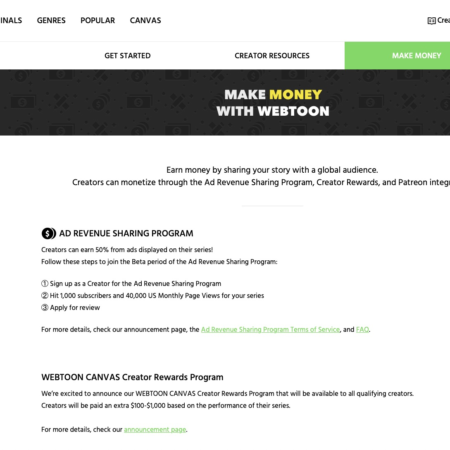
| Ad Revenue Sharing | 50% of ad revenue | 50% | 40,000+ Global Monthly Pageviews; must agree to Ad Revenue Terms |
| Patreon Integration | 100% (minus Patreon fees) | 0% (Platform takes no cut) | Must meet platform-specific external linking rules |
Note on Net Revenue: For the Super Like Program, net revenues are calculated as non-refundable gross revenues minus a 30% deduction that encompasses all application and in-app fees (such as the 30% taken by the Apple App Store or Google Play Store). WEBTOON does not receive any share of these app store fees. When fans purchase and send Super Likes, they become “Super Fans,” gaining extra visibility through special badges and prominent comment placement, which in turn drives more engagement and revenue for the creator.
Understanding the Manhwa Artist Contract
When an artist uploads their work, they enter into a binding legal agreement. The WEBTOON CANVAS Terms of Use outline the exact contractual terms that govern the relationship between the creator and the platform.
- Content Ownership: When publishing on CANVAS, creators always keep ownership over their work. The platform explicitly states that creators are welcome to use as many platforms as possible and continue to promote their work on social media.
- Binding Arbitration: Section 14 of the CANVAS Terms contains a binding arbitration and class action waiver clause. This dictates how disputes between the creator and WEBTOON will be handled, significantly affecting a creator’s legal rights and remedies.
- Policy Compliance: Creators must adhere to the Community Policy and Uploading Guidelines. “Digital Content” uploaded to the platform is governed by these rules, and failure to comply can result in the removal of content.
- Modifications: The platform reserves the right to change the agreement at any time. Continued use of the services after changes are posted confirms the creator’s acceptance of the new terms.
How Webtoons Are Published: The Creator’s Journey
To see how webtoons are published from a practical, day-to-day standpoint, the WEBTOON Academy provides a clear roadmap. CANVAS is designed as an open platform where anyone can publish anytime, but the mechanics require specific workflows.
- Desktop-First Creation: All creator tools are housed on the desktop website, as the mobile app is primarily focused on the reader experience.
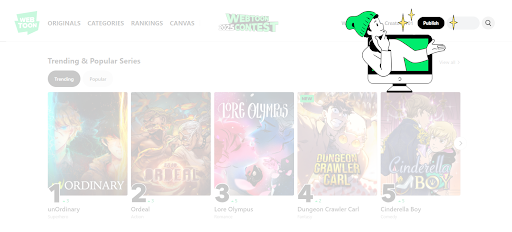
- Series Creation Steps: Creators click ‘Publish’ in the top right corner, register an account, click ‘Create Series’, fill in the series information, and upload the first episode.
- Wellness and Skill Building: The industry recognizes the immense physical and mental toll of weekly serialization. Platforms now offer resources on “Dealing With Creative Anxiety” and workshops to improve art and storytelling, ensuring creators have a strong foundation for long-term success.
For readers looking to access the results of this pipeline, our guide on Where to Read Manhwa Legally compares the official platforms that deliver these stories.
Sources and Verification
The following sources were consulted and independently verified for accuracy in this article:
- pfparticle.com — Consulted as background reference for this article on How the Manhwa Industry Works: From Artist to Reader.
- m.webtoons.com — Referenced for article on How the Manhwa Industry Works: From Artist to Reader.
- osztromok.com — Referenced for article on How the Manhwa Industry Works: From Artist to Reader.
- webtoons.com — Referenced for article on How the Manhwa Industry Works: From Artist to Reader.
- m.webtoons.com — Referenced for article on How the Manhwa Industry Works: From Artist to Reader.
Conclusion
The manhwa industry works through a delicate balance of creative freedom, technological innovation, and strict contractual frameworks. From surviving military censorship in the 1970s to pioneering the vertical scroll format, the manhwa publishing process has evolved into a global digital powerhouse. Understanding webtoon platform commission rates and the manhwa artist contract empowers both creators and readers to appreciate the complex ecosystem that delivers their favorite stories to their screens every week.
What part of the manhwa industry’s pipeline fascinates you the most? Are you more interested in the creative process or the business side of webtoon publishing? Let us know in the comments below, and don’t forget to subscribe to ManhwaHive for more deep dives into the world of webtoons!