
The global comics community is mourning the profound loss of a true visionary. According to reports from major Korean media outlets, legendary martial arts manhwa artist Seung-nam Ha (하승남, real name Ha Gong-seok) has passed away at the age of 68. The Korea Cartoonist Association confirmed that Ha died on November 2, 2026. His death marks the definitive end of an era for Korean comics, leaving behind a monumental manhwa legacy that fundamentally redefined action storytelling. Born in Busan in 1958, Ha entered the comics industry as an apprentice to veteran artist Nam-gil Heo before making his professional debut in 1980 with The King of Baseball Without a Nationality. As fans and creators reflect on his immense contributions, it is clear that his impact on the martial arts manhwa genre will be felt for generations.
A Pioneer of Martial Arts Manhwa
To understand the magnitude of Seung-nam Ha’s passing, one must examine the landscape of Korean comics during his formative years. When he began his career, the digital revolution of the Korean webtoon was a distant dream, and print manhwa was the sole medium. In this environment, Ha emerged as a pioneering force. He recognized early on that martial arts manhwa could be more than simple tales of good versus evil, infusing his narratives with deep philosophical undertones and complex political intrigue.
His approach to the murim manhwa genre was revolutionary, treating the martial arts world as a rich ecosystem with its own history and rules. During the 1980s, when demand for martial arts manhwa exploded across Korea’s manhwa rental shops, Ha pioneered a mass daily production system to supply this booming market, working alongside contemporaries such as Bong-seong Park and Jae-hak Lee. This era of prolific output helped define the visual vocabulary of Korean action comics for decades to come.
Major Works and Artistic Achievements
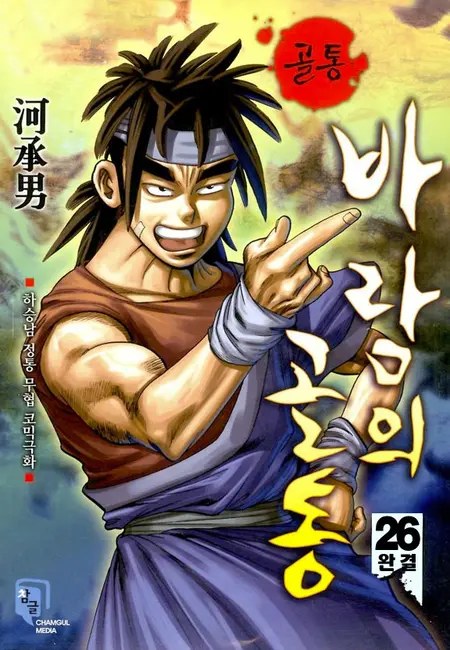
Ha’s breakthrough came with works that resonated deeply with Korean readers. His early title Mokrimbang first drew public attention, but it was Goltong’s Declaration of Departure (골통출사표), which began serialization in the daily newspaper Sports Today in 2001, that became his defining masterpiece. The comic follows Yoo Se-ok, a young man who enters the martial arts world at his master’s command and becomes involved in a series of chaotic adventures. The series quickly captured readers’ imaginations with its blend of gritty combat, humor, and richly drawn characters. The following year, Ha founded Ha Seung-nam Production and continued publishing works in the Goltong series.
He was also widely known for Divine Sword and Evil Sword (신검마검) and Wind of Goltong (바람의 골통), both of which reinforced his reputation for dynamic fight choreography on the page.
Cross-Border Career and Historic Milestones
Ha’s career was not confined to Korea. He actively pursued opportunities across East Asia, becoming one of the earliest Korean comic artists to build a transnational body of work. In 1994, he serialized comics in the Taiwanese magazine Infinite Boys MAX, marking an early cross-border collaboration. He later published Sayaka (2004) and Existence (2005) in Japanese manga magazines, demonstrating his ability to adapt his style for varied audiences. He was also the artist for the Records of the Three Kingdoms manga, showcasing his versatility in historical storytelling.
Perhaps his most significant accolade came in 2007, when Ha became the first Korean comic artist to be admitted as a full member of the Japan Cartoonists Association — a milestone that highlighted the growing recognition of Korean creators in the broader Asian comics market. This spirit of cross-cultural collaboration continues today, as seen in projects like The Boxer anime adaptation by Breccia, where Korean source material inspires international animation teams.
Influence on the Modern Korean Webtoon
The transition from traditional print manhwa to the digital, vertically scrolling Korean webtoon format represents a massive shift in comics history. While the medium has evolved, the core principles of visual storytelling championed by Seung-nam Ha remain highly relevant. Today’s top-tier martial arts webtoons, readily available on official platforms like WEBTOON, Tapas, Tappytoon, and Manta, carry the distinct DNA of Ha’s pioneering work.
Modern manhwa artists frequently cite Ha as a primary inspiration, studying his masterful composition. The vertical scroll format requires a unique approach to paneling, yet the underlying philosophy of guiding the reader through an action sequence is a direct inheritance from Ha’s print-era innovations. The murim genre’s continued dominance on digital platforms — from solo-powered fantasy epics like Solo Leveling: Ragnarok to the upcoming Warner Bros. × WEBTOON adaptations slated for 2026 — all trace their creative lineage back to the templates Ha perfected in the 1980s and 2000s.
His influence is particularly evident in how contemporary creators handle the murim aesthetic. The intricate faction politics and overarching themes of brotherhood that define modern murim webtoons all trace their lineage back to the world-building frameworks Ha established. By demonstrating that Korean comics could support long-form, epic storytelling, he helped legitimize the medium in the eyes of critics and the general public.
Industry Mourning and Tributes
The outpouring of grief following the news of his passing is a testament to Seung-nam Ha’s extraordinary life and career. The Korea Cartoonist Association, where Ha served as a board member during the 16th, 18th, and 21st through 24th terms, announced his death and confirmed the arrangements. Colleagues across the Korean comics industry have remembered him not only as a gifted artist but also as a dedicated advocate for creators’ rights and professional development. He was a storyteller who used the unique language of comics to explore human resilience and the relentless pursuit of mastery, wrapped in the thrilling package of a martial arts epic.
Honoring an Enduring Legacy
He taught us that true strength lies not just in physical power, but in the unwavering resolve of the heart. Ha’s career, spanning over four decades, not only introduced iconic characters like Yoo Se-ok but also opened doors for future Korean artists seeking exposure beyond their borders. His passing marks the end of an era, yet his work continues to inspire new generations of creators who aim to blend traditional martial arts themes with modern narrative techniques.
Sources and Verification
The following sources were consulted and independently verified for accuracy in this article:
- Korea Economic Daily (Hankyung) — Authoritative Korean obituary sourced from Yonhap News Agency, detailing Ha’s biography, major works including Goltong’s Declaration of Departure, and his historic Japan Cartoonists Association membership.
- Seoul Shinmun — Major Korean newspaper reporting Ha’s passing with details from the Korea Cartoonist Association announcement, including his birth in Busan (1958), debut in 1980, and service as board member across multiple terms.
- Jaekyung Ilbo (via Yonhap) — Korean daily reprinting the Yonhap wire report on Ha’s death, covering his mass-production manhwa system in the 1980s and cross-border publishing in Taiwan and Japan.
- Cine21 — In-depth Korean film and culture magazine feature on Ha’s legacy as the first Korean manga artist admitted to the Japan Cartoonists Association, with career retrospective spanning four decades.
Conclusion
The passing of Seung-nam Ha at 68 is a monumental loss for Korean comics, but his manhwa legacy is immortalized in every action sequence and murim manhwa that followed. He was a true pioneer who elevated the martial arts manhwa genre to unprecedented heights, leaving an indelible mark on the Korean webtoon landscape. We encourage you to honor his memory by exploring his iconic works, particularly Goltong’s Declaration of Departure and Divine Sword and Evil Sword, and by supporting the modern creators who continue to draw inspiration from his genius. What is your favorite martial arts manhwa, and how do you think Seung-nam Ha’s work influenced it? Share your thoughts in the comments below, and be sure to explore more news and reading guides right here on ManhwaHive.





One comment