
Netflix has repeatedly turned Korean webtoons and manhwa into live-action series, but the public record does not show a single, separately disclosed “manhwa investment fund,” a standard rights price, or a guaranteed adaptation budget. What it does show is a sustained pattern: Netflix commissions selected webtoon adaptations, works with Korean production companies, and sometimes continues a property into another season. This guide explains why the format fits Netflix’s business, what the announced projects actually prove, and which claims about webtoon deals remain private.
The Short Answer
Manhwa can give a screen producer a developed story, a recognizable visual identity, and an existing audience signal before a series enters production. Those advantages can make an adaptation easier to evaluate than an entirely unknown concept. They do not eliminate development risk, guarantee viewers, or make every webtoon inexpensive to adapt.
The word investment also needs precision. Netflix’s webtoon activity sits within its broader commissioning and distribution of Korean series. In 2023, The Hollywood Reporter reported that Netflix planned to spend $2.5 billion on Korean content over four years. That figure covers Korean films, series, and unscripted entertainment; it is not a disclosed webtoon-only allocation. For the wider creative and commercial context, see how the manhwa industry works from artist to reader.
What Netflix Has Actually Announced
The clearest evidence is a sequence of project-specific announcements rather than a public master deal for manhwa adaptations:
| Public milestone | What the official source confirms | What it does not establish |
|---|---|---|
| Love Alarm announced in 2017 | Netflix described it as its first Korean original series and identified Chon Kye-young’s webtoon as the source. | No public rights fee or standard adaptation royalty. |
| Sweet Home announced in 2019 | Netflix confirmed the Naver webtoon by Kim Carnby and Hwang Young-chan as the basis and named the director and production partners. | No disclosed per-episode budget or promised audience conversion. |
| All of Us Are Dead announced in 2020 | Netflix identified Joo Dong-geun’s Naver webtoon Now at My School as the source and confirmed the adaptation team. | The announcement did not claim that every webtoon reader would become a subscriber. |
| Bloodhounds adaptation and Season 2 | WEBTOON Entertainment documented the webtoon origin and first adaptation; Netflix confirmed Season 2 production in November 2025. | A renewal does not reveal licensing terms or profitability. |
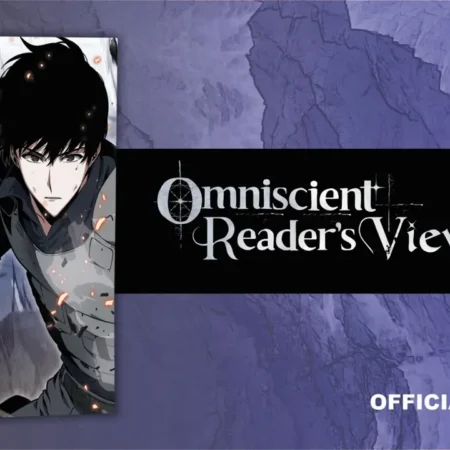
| Solo Leveling live-action announcement | Netflix confirmed Byeon Woo-seok as Sung Jin-woo and named Kakao Entertainment and SANAI as producers. | The announcement is a project confirmation, not evidence that all webtoons receive similar backing. |
Netflix’s original announcements for Love Alarm, Sweet Home, and All of Us Are Dead are especially useful because they distinguish confirmed facts from later interpretation. For a title-by-title viewing resource, use our Netflix manhwa adaptation catalog, while treating cast, release-stage, and availability details as changeable.
1. A Webtoon Provides a Developed Narrative Blueprint
A webtoon already contains characters, dialogue, episode breaks, settings, and a visual treatment of key scenes. That material can help producers assess tone and story structure before commissioning a full screen adaptation. Vertical-scroll action and dramatic reveals may also suggest useful shot ideas.
This is a development advantage, not a ready-made shooting script. Live action still requires screenwriting, casting, location or set design, scheduling, visual-effects planning, and editing. A faithful adaptation can diverge substantially because a comic panel and a filmed sequence have different costs and storytelling constraints. Netflix’s All of Us Are Dead announcement, for example, frames the project as a new series based on a webtoon—not as a reproduction of the comic panel for panel.
2. Audience Data Can Reduce Uncertainty, Not Guarantee Demand
Publishers can observe reads, follows, comments, completion behavior, and other engagement signals before an adaptation is approved. Those signals may help identify a passionate readership or a story with international reach. They are not interchangeable with Netflix viewing hours, paid subscriptions, or retention.
Netflix’s Solo Leveling announcement says the webtoon and web novel together had accumulated 14.3 billion global page views. That is a cumulative platform-engagement metric, not 14.3 billion readers and not a Netflix audience forecast. The same announcement names Byeon Woo-seok, Kakao Entertainment, and SANAI, which are independently checkable project facts.
3. The Format Supports Both Local and International Stories
The confirmed adaptations span romance technology, survival horror, zombies, action noir, and fantasy. That range matters more than the unsupported idea of one universal “Korean webtoon audience.” Netflix can evaluate different genres for different markets while retaining the original title’s identity.
International reach still depends on execution. Translation, casting, pacing, genre familiarity, marketing, and release timing all affect whether a series travels. A successful adaptation cannot be attributed to the webtoon alone.
4. An Adaptation Can Extend a Property Without Proving a Formula
The continuation of Bloodhounds offers a useful, limited case study. WEBTOON Entertainment’s March 2023 announcement identifies Jeong Chan’s webtoon, its serialization on Naver WEBTOON, and the production companies involved in the first Netflix series. In January 2025, Netflix separately confirmed Season 2 production, the return of the lead actors, and Rain’s addition to the cast.

The two announcements support a narrow conclusion: the property moved from webtoon to live action and then received another production commitment. They do not disclose adaptation fees, rights ownership after production, the decision threshold for renewal, or whether other titles will follow the same path.
What a “Webtoon Deal” Can Mean
Several different transactions can sit behind one adaptation announcement:
- Adaptation rights or a license. The original creator and publisher may grant defined screen-adaptation rights under a contract whose term, territory, exclusivity, and payment structure are usually private.
- A series commission. Netflix can order a project from production partners. The official Sweet Home and All of Us Are Dead announcements identify such partners without publishing the underlying commercial terms.
- Production and distribution arrangements. Studios, producers, and platform responsibilities vary by project. A Netflix original label should not be read as proof that Netflix owns the underlying webtoon.
- A later-season decision. Bloodhounds Season 2 shows that continuation can happen, but each season requires its own production decision.
Because these layers are separate, headlines about a “Netflix webtoon deal” should not be translated into a standard payday for creators. Creator compensation can involve different contracts and revenue channels; our guide to how manhwa artists get paid explains why adaptation income should not be confused with page-view revenue.
Why Adaptation Economics Are Often Misreported
Public announcements usually emphasize creative participants and story premises, not budgets. It is therefore unsafe to assign a universal cost advantage to webtoon adaptations or to quote a per-episode figure without a project-specific source. Action, monsters, large crowds, and visual effects can make an established comic expensive to film, while a dialogue-led romance may have a different cost profile.
The same caution applies to competition. Netflix is not the only company adapting Korean digital comics; Disney+ has its own high-profile example in The Remarried Empress. Competing projects show industry demand for adaptable stories, but they do not reveal a shared price schedule or prove that one platform has a standard manhwa acquisition program.
How to Evaluate the Next Netflix–Webtoon Announcement
Use this checklist before repeating claims about a new deal:
- Find the primary announcement. Prefer Netflix, WEBTOON Entertainment, the original publisher, or a named production company over an unattributed repost.
- Separate announcement from release. A confirmed project may still be in development or production; do not assign it a release year without a source.
- Identify the actual metric. Page views, unique readers, subscribers, viewing hours, and rankings measure different things.
- Name the partners precisely. Publisher, producer, platform, and creator are not interchangeable roles.
- Do not invent terms. If no reliable source discloses a rights fee, budget, royalty, or ownership clause, leave it undisclosed.
- Check later updates. Casting and production status can change; use the latest official project page when available.
The Bottom Line
Netflix’s documented interest in manhwa is best understood as selective adaptation and production activity within a broader Korean-content strategy. Webtoons offer developed stories, visual references, and audience signals that can improve project evaluation. They do not guarantee viewers, eliminate production costs, or create a public, uniform deal template. The strongest evidence remains project by project: official announcements for Love Alarm, Sweet Home, All of Us Are Dead, Bloodhounds, and Solo Leveling. Claims beyond those sources—especially exact rights prices, adaptation totals, and assumed profits—should be treated as unverified unless a primary source discloses them.
Sources and Verification
- Netflix: Love Alarm announcement
- Netflix: Sweet Home announcement
- Netflix: All of Us Are Dead announcement
- WEBTOON Entertainment: Bloodhounds adaptation announcement
- Netflix: Bloodhounds Season 2 production announcement
- Netflix: Solo Leveling live-action announcement
- The Hollywood Reporter: Netflix’s broader Korean-content spending plan
All external sources and both official image files were checked for access on 2026-11-24. This article is an independent analysis, not a Netflix or WEBTOON publication; no undisclosed deal terms are inferred.