

Disney+’s multimillion-dollar gamble on “The Remarried Empress” has already been settled at the box office of streaming. The K-drama adaptation of the 2.97-billion-view webtoon premiered on Disney+ and Hulu on November 3, 2026 — a full day ahead of its scheduled November 4 launch — and within three days Disney declared it the most viewed local original premiere in the history of both platforms, ranking as the number one Korean title premiere in more than 50 markets including the US, the UK, France, Spain, Germany, Mexico, Chile, Australia, New Zealand and Canada. The series translates a distinctly European-inspired royal court using an entirely Korean cast, and the question that dominated the run-up to launch — whether Shin Min-a, Ju Ji-hoon, Lee Jong-suk and Lee Se-young could carry a Western medieval aesthetic — is now being answered by viewers in dozens of countries at once.
The 2.97-Billion-View Phenomenon: From Web Novel to Global Webtoon
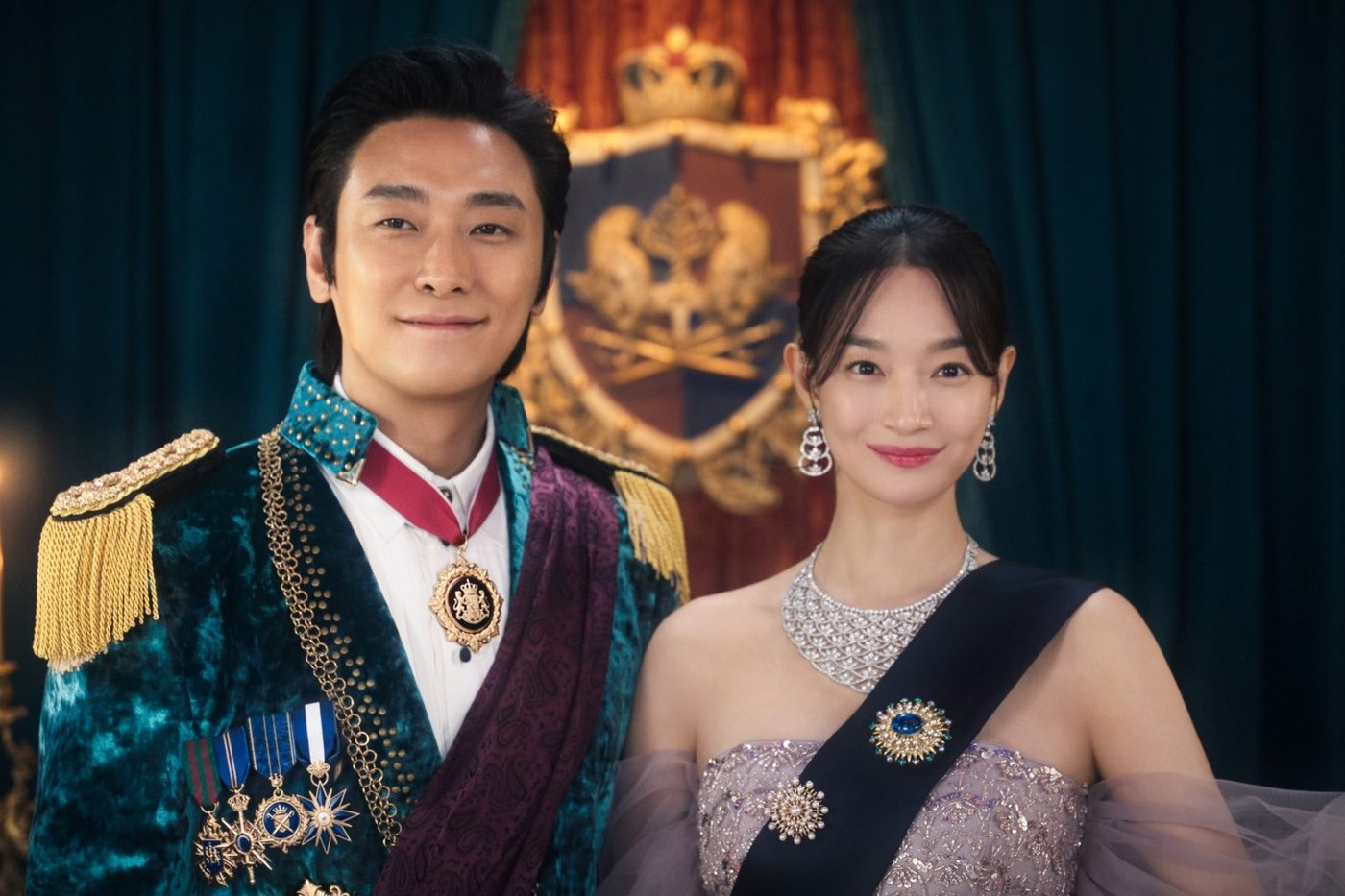
The source material for this highly anticipated K-drama is no ordinary romance fantasy. First launched as a web novel in 2018 and subsequently adapted into a wildly popular webtoon in 2019, “The Remarried Empress” has amassed a staggering 2.97 billion views worldwide. The narrative follows the brilliant and composed Empress Navier, played by Shin Min-a, whose perfect life is upended when her husband, Emperor Sovieshu (Ju Ji-hoon), demands a divorce to elevate Rashta (Lee Se-young), a former runaway slave. As Navier navigates the treacherous political waters of the Eastern Empire, she eventually finds solace and a new beginning with Heinrey, portrayed by Lee Jong-suk. The franchise’s massive success has also paved the way for broader multimedia plans, as detailed in The Remarried Empress Multimedia Expansion, which includes side stories and an upcoming 2027 anime.
On screen, the rollout has been just as deliberate. The first four episodes arrived on November 3 as what Disney called a special thank you to fans, followed by two new episodes every Wednesday from November 11 through the ten-episode finale on November 25. That cadence keeps the series running on Disney+ and Hulu through the week before Thanksgiving, squarely inside the holiday viewing window.
The sheer scale of this intellectual property makes it potentially the platform’s biggest gambit of the year. This ongoing industry trend of adapting popular webtoons into other media formats is further accelerated by announcements like the new manhwa adaptations for the 2026 slate. The massive commercial footprint of these properties underscores why Disney+ is investing heavily in “The Remarried Empress,” treating it not just as a local drama, but as a cornerstone of its international content strategy. Adapting a story of this magnitude requires more than just a faithful script; it demands a visual and atmospheric translation that satisfies a massive, deeply invested global fanbase. The announcement of an all-Korean cast for a Western-inspired medieval setting initially sparked intense debate among fans over the apparent disconnect, making the production’s strategy all the more critical to the show’s success.
Bridging the Cultural Gap: Physical Authenticity in a European Setting
The most significant hurdle for “The Remarried Empress” is undeniably its setting. Unlike traditional historical K-dramas set in the Joseon dynasty, this story takes place in a distinctly European-inspired royal court. To bridge this cultural and geographical gap, veteran director Cho Soo-won, known for his work on “Pinocchio” and “I Hear Your Voice,” has placed physical authenticity at the center of his directorial approach. Rather than relying solely on soundstages or CGI to recreate a fictional Western empire, the production undertook extensive international location scouting to build a tangible world that the audience can genuinely believe in.
“I wanted the spaces the characters inhabit to feel grounded and physical,” Cho explained during the show’s press conference in Seoul. This commitment to practical locations is evident in the production’s choice of filming sites. According to The Korea Herald, the imperial palace of the Eastern Empire was filmed at the magnificent Schleissheim Palace in Germany. Meanwhile, the lush gardens where Empress Navier develops her relationship with Heinrey were shot at the historic Kromeriz Gardens in the Czech Republic.
Perhaps the most fascinating detail is how the production blended the two cultures on screen. In the streets of Kutna Hora, also in the Czech Republic, the art department placed storefronts bearing Korean-language signs, seamlessly blending them into the classic European architecture. This specific aesthetic—often referred to as “rofan” (romance fantasy) within the Korean webtoon community—deliberately utilizes European aristocratic tropes to explore complex themes of class, divorce, and female agency without the rigid constraints of actual Joseon-era historical records. By filming in actual European estates like Schleissheim Palace, the production elevates this digital-native genre into prestige television, validating the “rofan” category as a serious contender in the global fantasy drama market. This unique visual choice brings the story’s specific cultural hybridity to life, acknowledging the Korean origins of the narrative while respecting the Western aesthetic of the fictional world. This approach to live-action adaptation is shared by other recent projects, such as Netflix’s live-action adaptation of ‘The Blue Road’, which similarly seeks to bridge cultural gaps for a global audience. Cho noted that thanks to strong backing from the production company, they had the resources to scout numerous international locations, recalling the moment they found the German castle and realized, “This is it. We’re going to have so much fun here.”
The Cast and Director: Navigating Fan Expectations and Tonal Balance
While the locations provide the physical backdrop, it is the cast who must breathe life into this hybrid world. Ju Ji-hoon, who plays the conflicted and ultimately villainous Emperor Sovieshu, openly admitted his initial hesitation regarding the cultural mismatch of the project. “It felt completely unfamiliar,” Ju recalled. “I caught myself wondering, ‘Is this a drama I can sample, look at or digest?’ But someone I trust pushed me to take the bite. In hindsight, I realized I was holding a prejudice — it’s like being completely comfortable with Korean broth, but suddenly hesitant when someone calls it ‘soup’.”
To ground his performance within this Western aesthetic, Ju drew heavily on traditional Korean period-drama sensibilities. He and the cast spent a great deal of time analyzing expressions and speech patterns from past historical works to hit the right balance, constantly testing subtle phrasing to ensure every scene felt authentic to the characters’ royal status. This approach suggests that the K-drama will rely on the emotional and hierarchical authenticity of Korean sageuk (historical drama) rather than attempting to mimic Western acting styles, creating a unique fusion that honors both the source material’s setting and the actors’ cultural strengths.
Navigating the tonality of the source material presented another distinct challenge. The original web novel carries a darker, more serious, and politically intricate tone, whereas the 2019 webtoon adaptation is notably brighter, more colorful, and playful. Director Cho acknowledged this contrast, noting that his primary goal was to find a middle ground to establish the overarching tone of the series. Balancing the ruthless political maneuvering and emotional betrayal of the novel with the vibrant, romantic visual language of the webtoon will be crucial in satisfying both legacy readers and new viewers tuning in for the star-studded cast. Disney+’s willingness to fund such an unconventional visual hybrid reflects a broader shift in streaming economics. Unlike domestic broadcasters that rely on traditional advertising and local viewership, global platforms require IP with built-in international recognition. The 2.97 billion views provide a built-in audience that mitigates the financial risk of shooting on location in Germany and the Czech Republic, proving that webtoon metrics are now the primary greenlighting metric for high-budget K-dramas. This global expansion and increasing demand for Korean webtoon adaptations across streaming platforms is also evident in the anime sector, highlighted by the major manhwa adaptations in Crunchyroll’s autumn lineup.
Conclusion
Disney+’s “The Remarried Empress” is a case study in cross-cultural adaptation that is now playing out in public rather than in speculation. By prioritizing physical authenticity through extensive European location scouting and relying on the seasoned talents of Shin Min-a, Ju Ji-hoon, and Lee Jong-suk, the production set out to solve the inherent contradictions of adapting a Western-set webtoon with an all-Korean cast. The first three days of viewing suggest the bet landed: a record local-original premiere and a number one Korean title launch in more than 50 markets, with two new episodes dropping every Wednesday through the ten-episode finale on November 25. Whether that momentum holds to the end will determine how quickly other European-set webtoons receive similar high-budget, location-shot treatments.
For those eager to dive into the original story that started it all, “The Remarried Empress” webtoon is available to read officially on WEBTOON. Stay tuned to ManhwaHive for more updates, reviews, and reading guides on the biggest manhwa and K-drama adaptations hitting our screens. What are your thoughts on casting an all-Korean cast in a European-inspired setting? Let us know in the comments below and keep exploring the vast world of webtoons with us!
Sources and Verification
The following sources were consulted and independently verified for accuracy in this article:
- The Korea Herald — Interviews with director Cho Soo-won and actor Ju Ji-hoon on the all-Korean cast, the European location shoots in Germany and the Czech Republic, and the tonal balancing between the novel and the webtoon.
- The Walt Disney Company — Official announcement (November 6, 2026) that the series became the most viewed local original premiere of all time on Disney+ and Hulu, based on three days of views, and ranks first among Korean title premieres in over 50 markets.
- The Walt Disney Company — Official announcement (November 3, 2026) of the surprise one-day-early launch of the first four episodes, and the weekly release schedule through the finale.





One comment