
South Korea’s Ministry of Science and ICT (MSIT) held the finals of its first 2026 AI Creative Contest on October 24 at the Kakao AI Campus in Yongin, Gyeonggi Province, where about 300 finalists and their families watched children build fairy tales, children’s songs and webtoons using Korean-made AI tools.
It is worth being precise about what this event is: not a webtoon competition, but a three-track creative contest — story, sound and art — aimed at preschoolers and elementary school students, and it runs as one program inside the ministry’s much larger National AI Competition, which opened on March 26 and had drawn roughly 3.56 million participants by mid-October against an original target of two million. The webtoon track is one lane of a much wider policy push, and that framing matters for anyone trying to read what Seoul is doing with comics and AI.
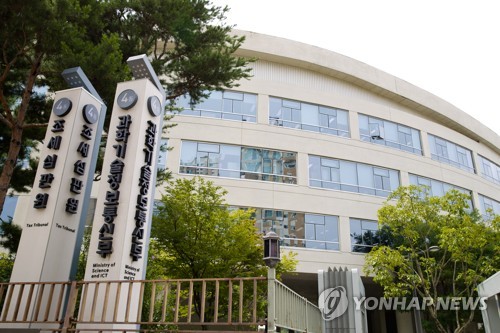
What Happened at the Finals
The contest’s common theme was “A Future Living Alongside AI.” Participants picked one of three categories — story (fairy tale), sound (children’s song) or art (webtoon) — and produced a finished piece on site. The final round drew about 300 finalists and family members to the Kakao AI Campus, and AI experience booths ran after the competition.
The road to the final was long. Preliminary rounds began on June 21 in Busan and then travelled through Incheon, Jeju, Seoul, Wonju, Daejeon, Daegu, Andong, Gwangju and Jeonju — ten regions in total — drawing about 1,700 participants. That regional spread is the part easiest to overlook: routing through secondary cities rather than Seoul is how a first-year contest reached 1,700 children.
Vice Minister Ryu Je-myung, who attended the finals, framed the contest as evidence of latent capability. Speaking at the event, he said the contest had confirmed young generations’ interest in and potential with AI, and that the ministry would keep supporting them so that capability could continue to grow.
The Four Korean AI Tools Behind the Entries
Every entry was made with one of four domestically developed tools — a deliberate choice to expose the public to Korean AI products rather than route children through foreign general-purpose services.
- Solar — the large language model from Upstage, used for story drafting and text work.
- MathAI — a Korean math-focused AI learning tool.
- Miricanvas — a browser-based design platform widely used in Korean schools for layout and graphics.
- Witoon — a webtoon-focused creation tool, and the piece of the stack that made the art track possible for young children.
The webtoon track is therefore best understood as a tooling story as much as an art story. Witoon is built for the vertical-scroll panel format that Korean webtoons use, which lowers the barrier enough that an elementary school student can produce a readable episode in a single session. Whether that counts as drawing a webtoon is exactly the question the industry has been arguing about.
Ethics First, Then Creation
The sequencing of the contest is the detail worth paying attention to. Children did not sit down and generate images. Before producing anything, participants went through AI ethics training and instruction on how to use the tools. A mentor group of serving elementary school teachers worked the floor, helping children unfamiliar with the software finish their pieces.
What that ethics training covers, according to reporting on the event, is less about rules and more about boundaries: helping children develop a sense of where their own thinking ends and the tool’s output begins, and building the habit of not feeding other people’s artwork or faces into a generator without permission. For a comics industry that has spent two years arguing about consent and training data, that is a strikingly direct way to introduce the topic — not as a legal warning to professionals, but as basic literacy for eight-year-olds.
Why the Manhwa Industry Is Watching
The contest lands in the middle of a live argument. Korean webtoon platforms have been steadily expanding AI-assisted production, while artists and assistants have raised concerns about credit, consent and downward pressure on rates. A government ministry teaching children to make webtoons with AI does not settle that argument, but it does shift where the argument happens: if AI-assisted webtoon creation is taught as a normal school-age skill, the baseline expectation for what a webtoon is changes within a generation.
There is a commercial logic underneath as well. Korea’s platform giants have been pushing webtoon IP outward into anime and live-action adaptations, a strategy visible in the Warner Bros. Animation slate announced in October and in the wider race between Naver and Kakao to control the pipeline from panel to screen. More adaptable IP requires more source material, and cheaper creation tooling is one way to widen that funnel. The ministry’s contest does not say this out loud, but the four-tool lineup points in that direction.
The platforms themselves are under pressure from the other end. Kakao Entertainment’s decision to shut down Tapas in North America — a move that has already disrupted ongoing series and left readers scrambling — shows how quickly distribution decisions can reshape what creators can earn. Against that backdrop, a state-funded program that treats webtoon production as a teachable skill reads partly as industrial policy.
The Participation Gap Nobody Is Advertising
The impressive headline number comes with a caveat the ministry’s own materials acknowledge. Participation in the National AI Competition is counted cumulatively, so one person attending several events is counted several times, and a single-day workshop does not prove durable capability.
The harder numbers are less flattering. The government’s reported generative AI experience rate stands at 44.5% against a target of 60%. By age, people in their sixties sit at 14.3% against a 20% target, and people in their seventies at 4.9% against 10%. In the digital divide survey, vulnerable groups reach 31.9% against 59.4% for the general population. A children’s contest does not move any of those figures, and the ministry’s remaining calendar — an AI Edu-thon in Jeju on October 30, quiz finals on November 28, and a closing festival at Seoul’s Dongdaemun Design Plaza on December 11 — will be judged on whether the older and lower-income brackets moved at all.
Sources and Verification
This report draws on Korean-language coverage of the October 24 finals and the ministry’s published event details.
- Yonhap News TV — the finals date, venue, the four domestic AI tools, the ten-region preliminary structure with 1,700 participants, the teacher mentor group, and Vice Minister Ryu Je-myung’s remarks.
- Korea Manhwa Contents Agency (Korea Manhwa Museum webzine) — the contest’s framing for the comics sector, the three creative tracks and the AI ethics training sequence.
- Chungcheong News Q — the category names (Story with AI, Sound with AI, Art with AI), the ~300 attendees at the finals and the post-contest experience booths.
- AXINOVA — the National AI Competition context, the 3.56 million cumulative participation figure, and the AI experience rate and digital divide statistics used in the section above.
Conclusion
Seoul has not launched a webtoon contest. It has launched an AI literacy program that happens to include a webtoon track, and the distinction matters because it tells you where the policy priority sits. The ministry is not trying to find the next great webtoon artist; it is trying to make sure a generation grows up treating AI tools, and the ethics around them, as ordinary equipment.
For readers rather than policymakers, the more useful question is what the market currently rewards — our 2026 manhwa reading list tracks which series are actually pulling traffic this year.
For the manhwa industry, the practical effect will not show up in this year’s contest winners. It will show up in five or six years, when the first cohort that learned webtoon production this way enters the workforce with a completely different default assumption about how a panel gets made — and that is the development worth tracking, not the prize ceremony.